
Reduce purchased electricity
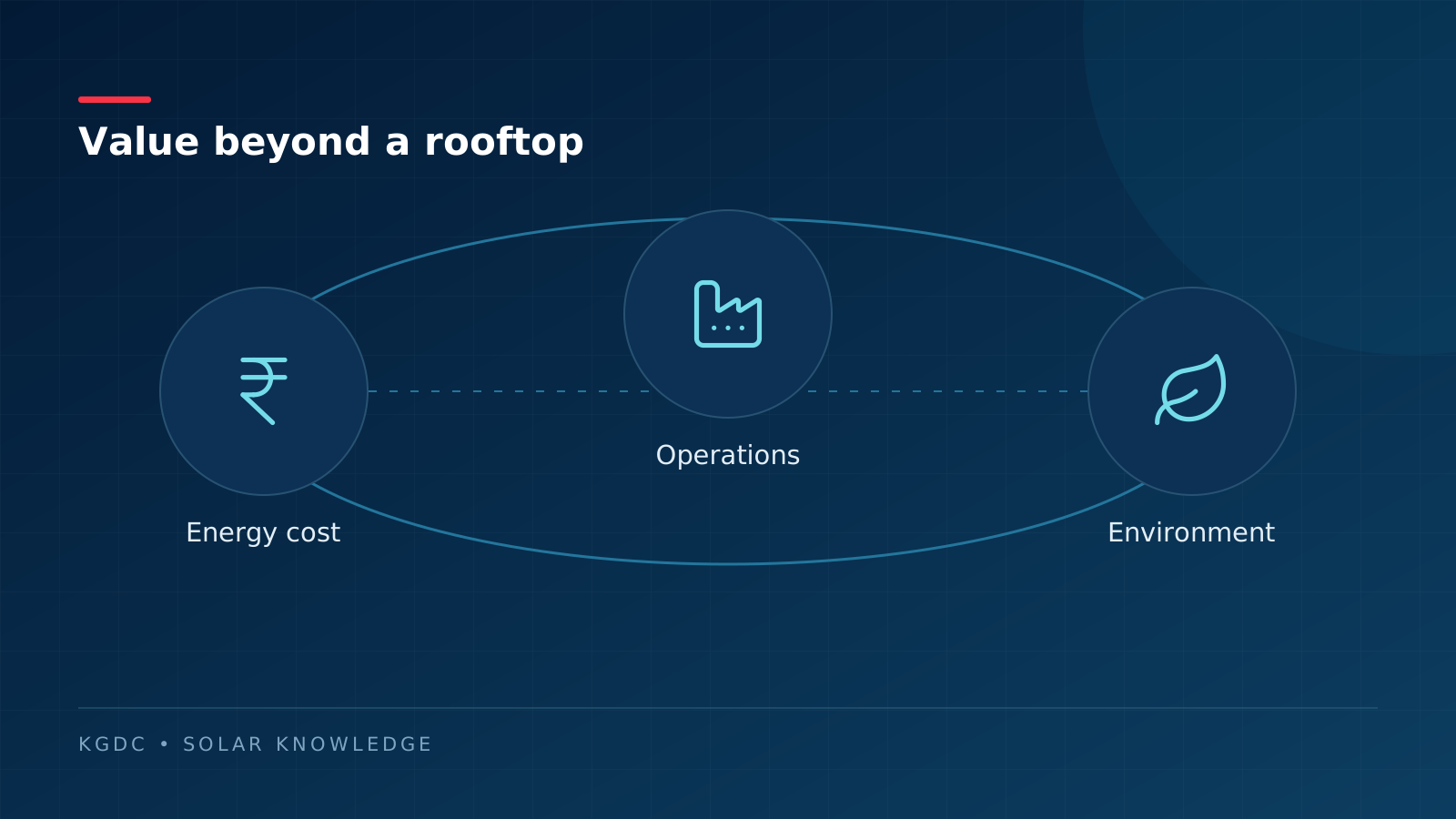
Self-consumed solar replaces eligible grid energy while the plant is generating. Export value, demand-charge effect and open-access settlement depend on the applicable commercial arrangement.
Use roofs, parking or land productively
A suitable roof, carport or land parcel can host generation. Structural capacity, wind, drainage, fire access, evacuation routes and future use must be respected.
Strengthen energy and ESG planning
Metered renewable generation can support emissions inventories, customer disclosures and internal targets. Carbon credits, RECs and claims require separate ownership and eligibility checks.
Add resilience only when designed
Solar by itself does not guarantee power during a grid failure. Combine an appropriate architecture, controls and storage when backup, peak management or operational continuity is required.
Treat it as a 20+ year asset
Select components, protection, structure, access, monitoring and service around lifecycle performance. A maintainable plant with clear accountability is more valuable than the lowest initial ₹/kW.