
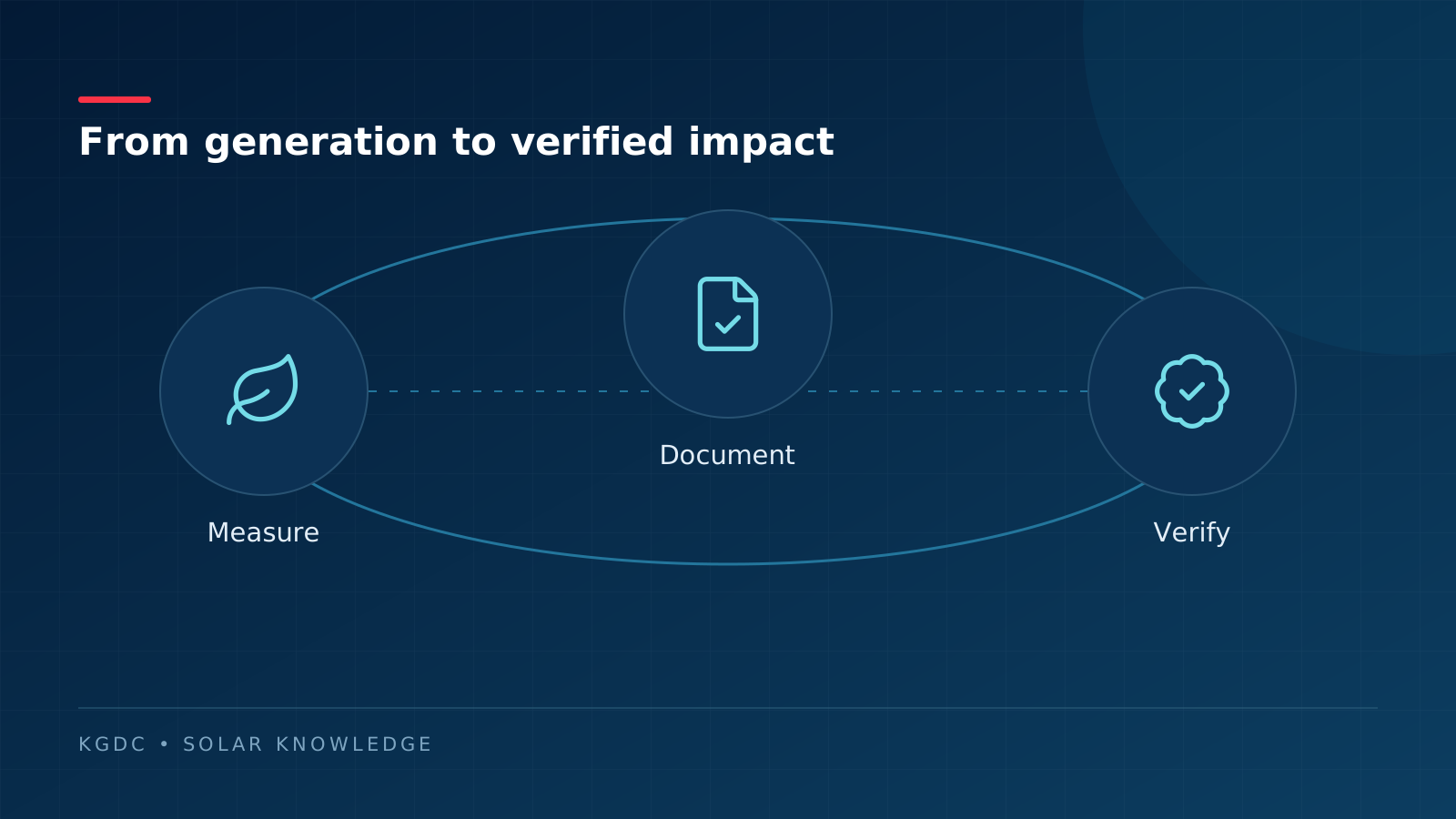

Two pathways—not one universal carbon-credit scheme
The compliance mechanism applies to notified, energy-intensive industrial units. Each obligated entity receives a greenhouse-gas emission-intensity target. A unit performing better than its target may become eligible for certificates; one falling short may need to buy or surrender certificates in accordance with the scheme. The offset mechanism is intended for non-obligated entities and eligible mitigation activities under approved methodologies. Participation, validation, monitoring and verification remain essential.
Where solar helps
A well-metered solar plant can reduce grid electricity purchases and the associated emissions reported by a facility. It may help an obligated entity improve its emissions intensity, strengthen an ESG transition plan and create a traceable renewable-energy dataset. Whether the solar activity itself qualifies for certificates under an offset methodology must be assessed separately—solar capacity alone is not an automatic credit.
What a business should prepare now
Treat carbon readiness as a data and governance exercise, not a marketing claim.
- Archive electricity bills, interval data, solar generation and shutdown records.
- Define the organisational boundary, baseline and emissions factors used in reporting.
- Record who owns renewable attributes, certificates and environmental claims under the EPC, OPEX, open-access or group-captive contract.
- Check approved methodology, additionality, registration, monitoring and verification requirements before forecasting credit revenue.
- Compare expected issuance value with aggregation, verification, registry and transaction costs.
- Avoid counting the same environmental benefit in conflicting claims or instruments.
A sensible commercial approach
First approve solar on its core economics: avoided electricity cost, resilience or renewable-energy procurement. Then model carbon value as a separate upside case with conservative volume, price and timeline assumptions. Large industrial portfolios, aggregated projects and facilities already covered by compliance targets will usually have a clearer reason to build carbon-market capability than a small standalone rooftop.
Questions for your management team
Which legal entity owns the emissions reduction? Is your facility an obligated entity? Which methodology applies? Who will validate and verify the project? What records will survive an audit? Who bears registration cost and market-price risk? Answering these questions creates a bankable carbon strategy; a generic promise of ‘free carbon-credit income’ does not.
Official references
- BEE — Indian Carbon Market and CCTS framework
- PIB — Indian Carbon Market portal launch at PRAKRITI 2026
- PIB — January 2026 expansion of GEI targets
- CERC — Carbon Credit Certificate trading regulations, 2026
Regulations, eligibility and utility procedures can change. Verify the current rule and site-specific approval before investment.