Savings + grid interactionNo standard outage backup

C&I POWER SYSTEMS · DG SYNCHRONISATION
Solar with diesel generators: what an operating facility must understand
See how controllers, meters and protection coordinate solar, site load, grid supply and DG sets.
Updated By KGDC Enterprises LLP · Corporate solar guidance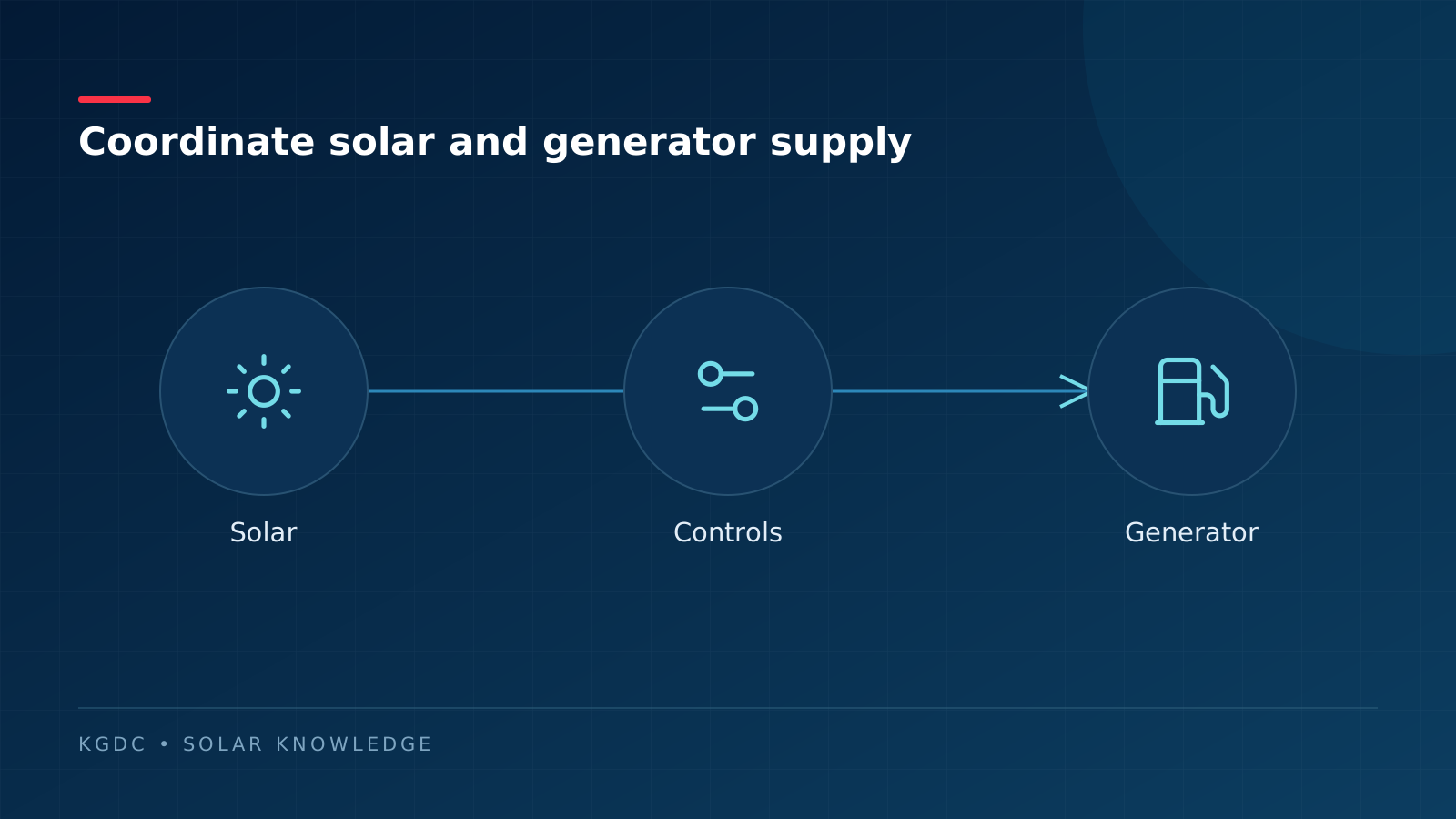
When the grid fails and a DG takes over, uncontrolled solar can push the generator below its safe loading range or create reverse power. A designed control philosophy continuously measures the operating state and limits solar output when required.
Site load changes every secondDG minimum loading is manufacturer-specificReverse-power protection is not optionalFail-safe behaviour must be commissioned
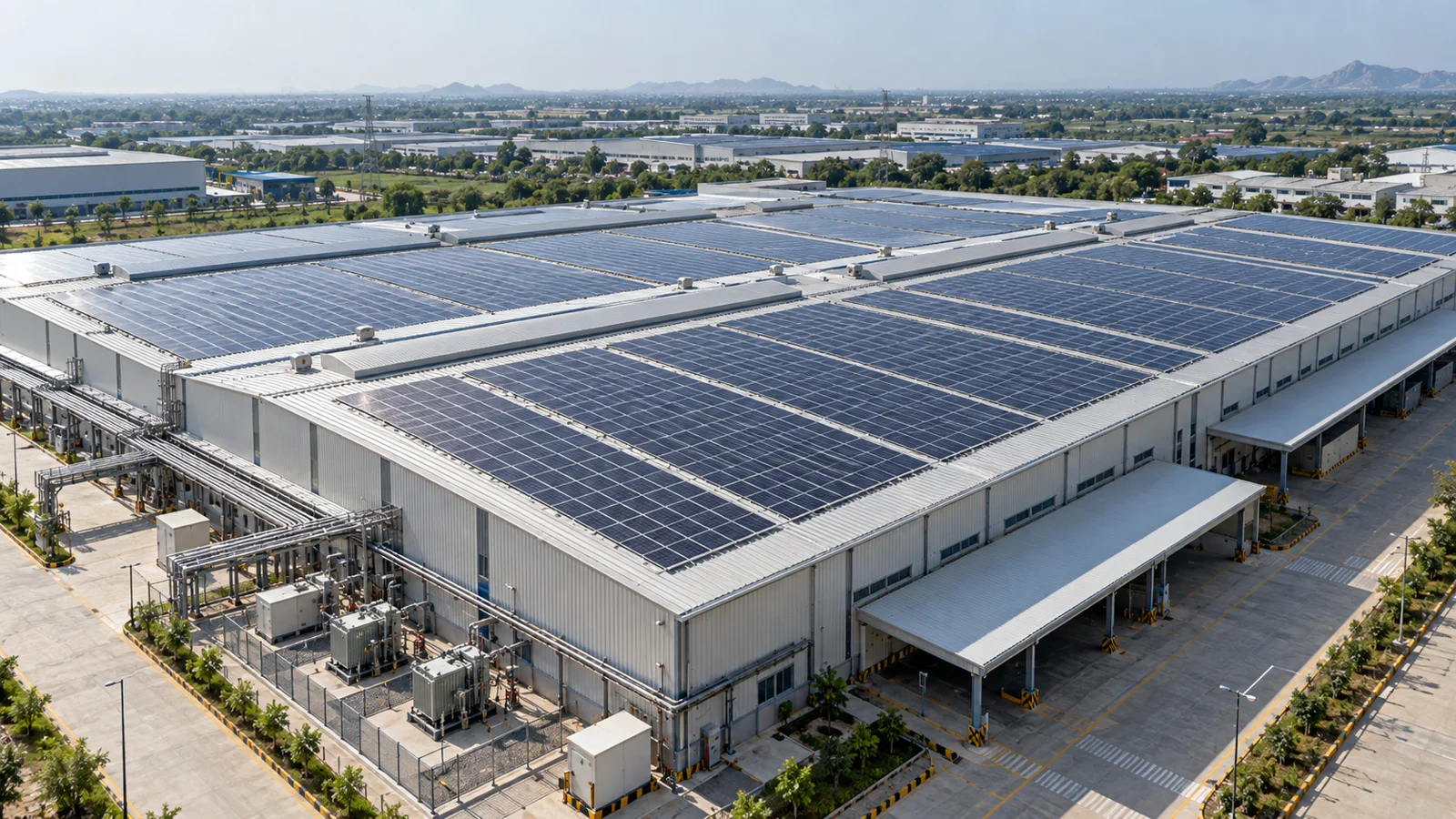
SEE HOW IT WORKS
The concept, made visible.
Independent supplyBattery and load discipline
Solar + storage + gridSelected-load resilience
Map every operating state
Document grid available, grid failure, DG start, DG stable, load step, DG trip and grid return. Record generator ratings, paralleling arrangement, existing controllers and critical loads.
Measure at the correct point
A power-plant controller or compatible energy-management system uses meters and communications to understand site demand and source status. The control point must represent the actual electrical topology.
Limit solar dynamically
The controller can curtail inverter output to preserve the agreed DG loading margin and prevent export or reverse power. The permitted minimum depends on the engine, alternator and manufacturer—not a universal percentage.
Design protection and communications
Specify reverse-power relay, interlocks, communication protocol, response time, loss-of-communication action and manual override. Controls must be compatible with both inverters and generator systems.
Commission transitions—not only steady state
Test load changes, DG start and stop, communication failure, meter failure, grid return and emergency shutdown. Hand over the sequence of operation and train the facility team.