Savings + grid interactionNo standard outage backup

SOLAR FUNDAMENTALS · ANIMATED EXPLAINER
How rooftop solar actually powers your home or business
Follow electricity from sunlight to DC power, the inverter, your live loads, the bidirectional meter and the grid.
Updated By KGDC Enterprises LLP · Corporate solar guidance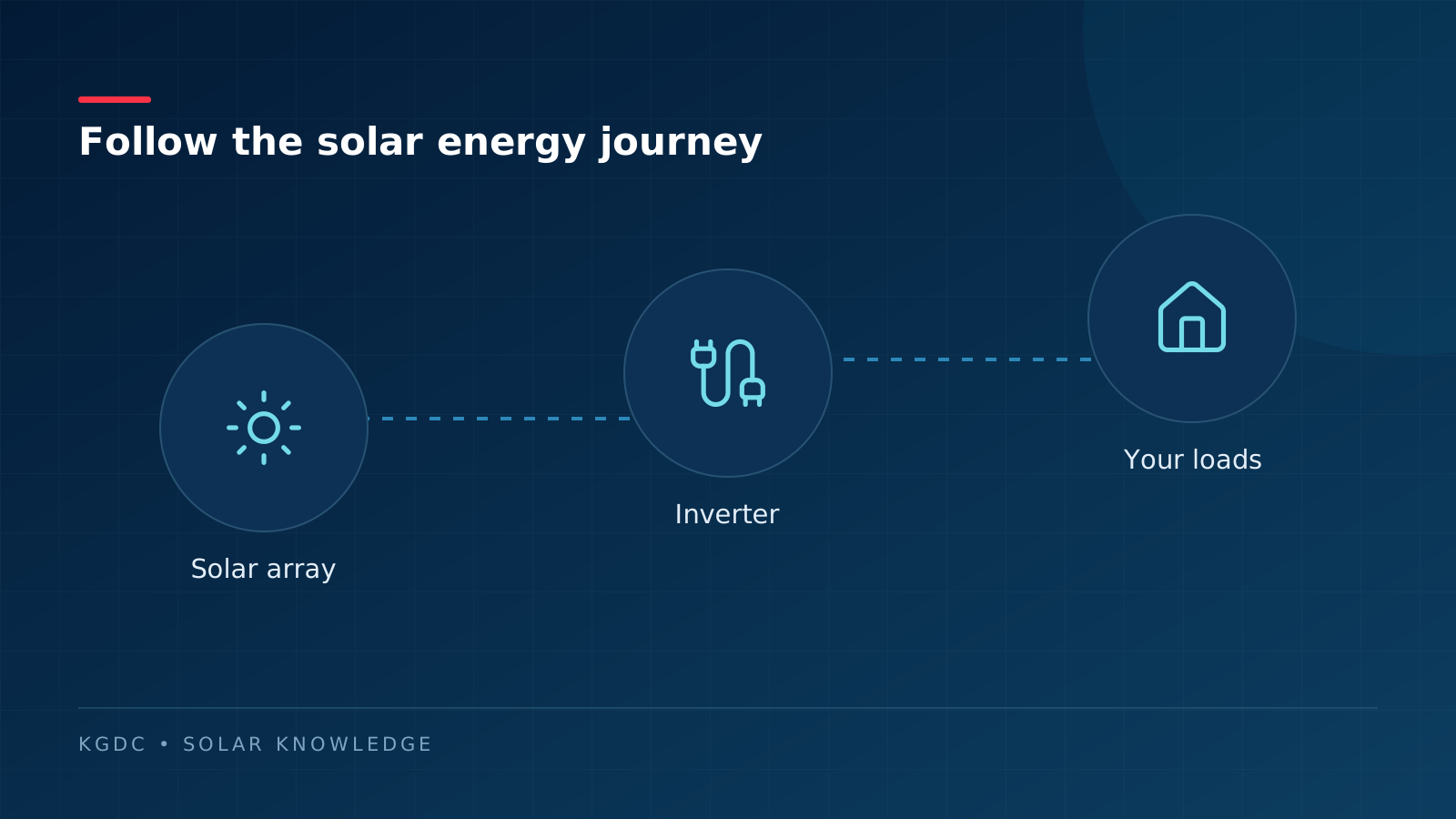
A solar plant is a coordinated electrical system—not only a set of panels. Modules create DC electricity, the inverter manages and converts it to AC, protections make the system safe, your premises uses available power and the meter records interaction with the grid.
Modules generate DCThe inverter produces usable ACLive loads consume solar firstControls and protections govern every operating state
SEE HOW IT WORKS
The concept, made visible.
Independent supplyBattery and load discipline
Solar + storage + gridSelected-load resilience
1. Sunlight becomes direct-current electricity
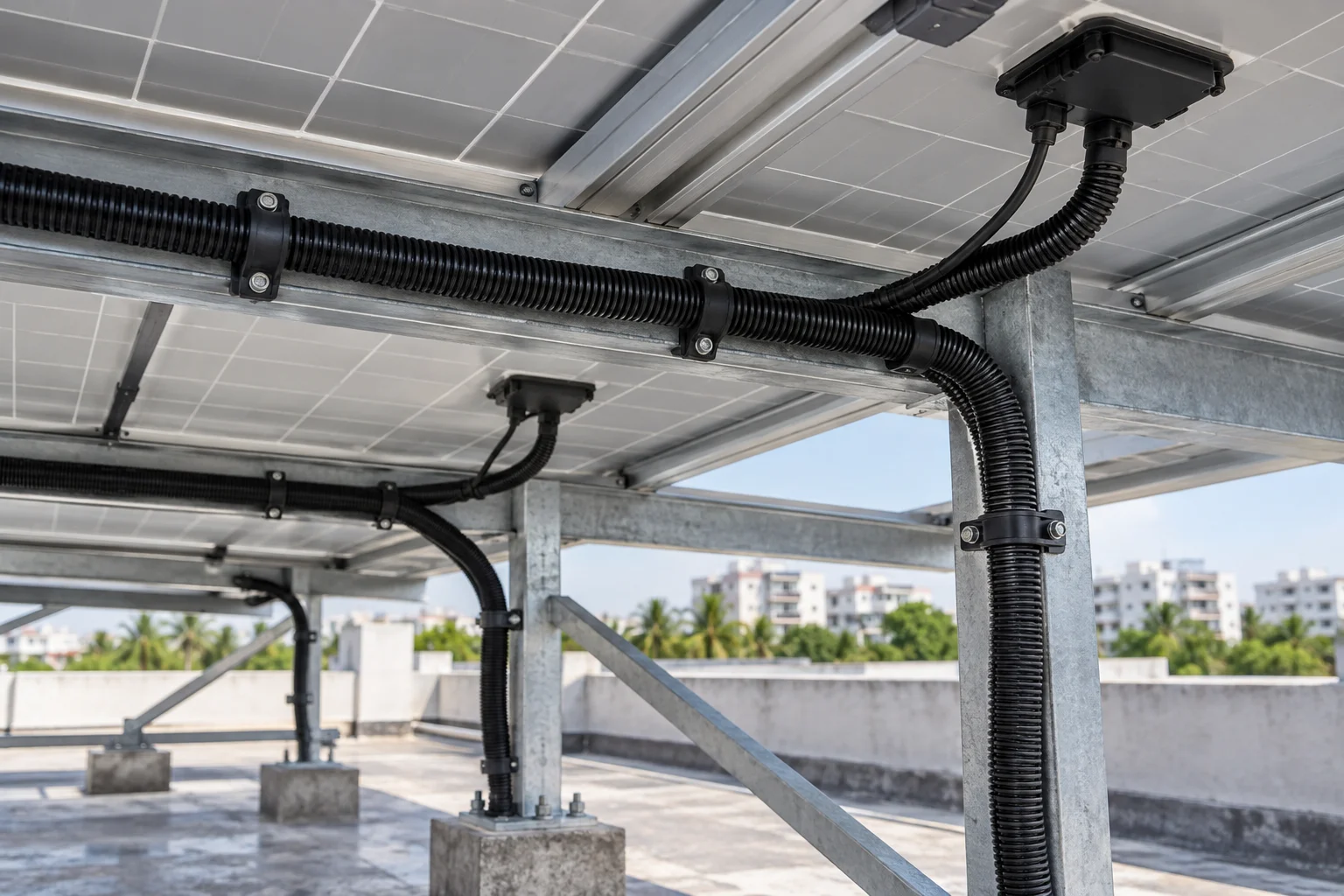
Solar cells produce DC electricity. Output changes with irradiance, temperature, orientation, shade, dirt, module matching and electrical design. A 100 kWp label is a rated capacity, not a promise of 100 kW in every hour.
2. The inverter manages and converts power
The inverter tracks the array’s operating point and converts DC to AC compatible with the site. String configuration, voltage windows, inverter loading, ventilation, surge protection, isolators and earthing all affect safe and reliable operation.
3. Your equipment uses available solar
Electricity follows the connected network. When solar is available, it reduces simultaneous grid import. If the site needs more power, the grid—or another approved source—supplies the balance. If eligible generation exceeds demand, the approved metering arrangement determines export.
4. Monitoring turns equipment into an accountable asset
Generation, inverter alarms, meter data and site consumption help distinguish a healthy plant from an underperforming one. Compare performance against weather and design assumptions, not against a perfect daily number.
5. Backup is a separate function
A standard on-grid plant shuts down when the grid fails. If you need backup, identify critical loads, starting surges and required runtime. The hybrid inverter, battery, changeover or isolation arrangement and essential-load distribution must be designed together.
Official references
Regulations, eligibility and utility procedures can change. Verify the current rule and site-specific approval before investment.