
1. Validate the symptom
Compare the same month or weather-normalised period. Check meter data against the monitoring portal and identify communication gaps, inverter downtime or grid outages.
2. Inspect what changed around the array
Look for dust, bird fouling, vegetation, a new water tank, nearby construction, antenna shadows, damaged drainage or unsafe access. Photograph conditions before and after corrective work.
3. Review alarms and electrical evidence
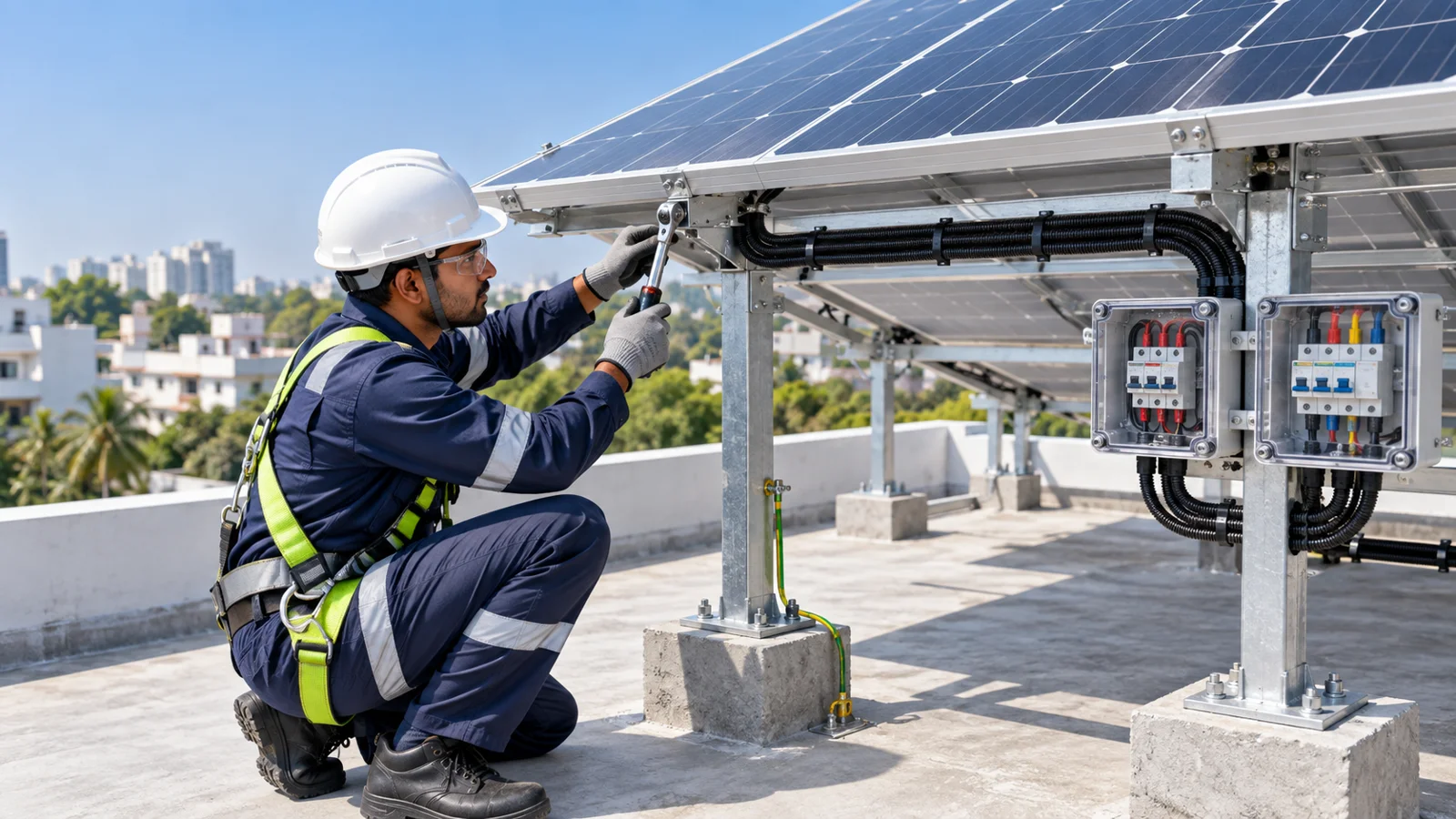
A qualified technician should check inverter logs, string current and voltage, isolators, connectors, protection devices, earthing and thermal hotspots where relevant. Follow isolation and roof-safety procedures.
4. Compare against the design
Check module layout, string sizing, clipping, orientation, shading study, inverter loading and export-control settings. Some losses are design assumptions; others are correctable faults.
5. Close with a corrective-action report
Record cause, evidence, repair, retest and expected recovery. Keep serial numbers, commissioning baselines and warranty records ready for escalation.