
Park in the shade.
Charge with the sun.
Solar carports with integrated EV charging bring productive energy generation to parking spaces—without using your building’s roof.
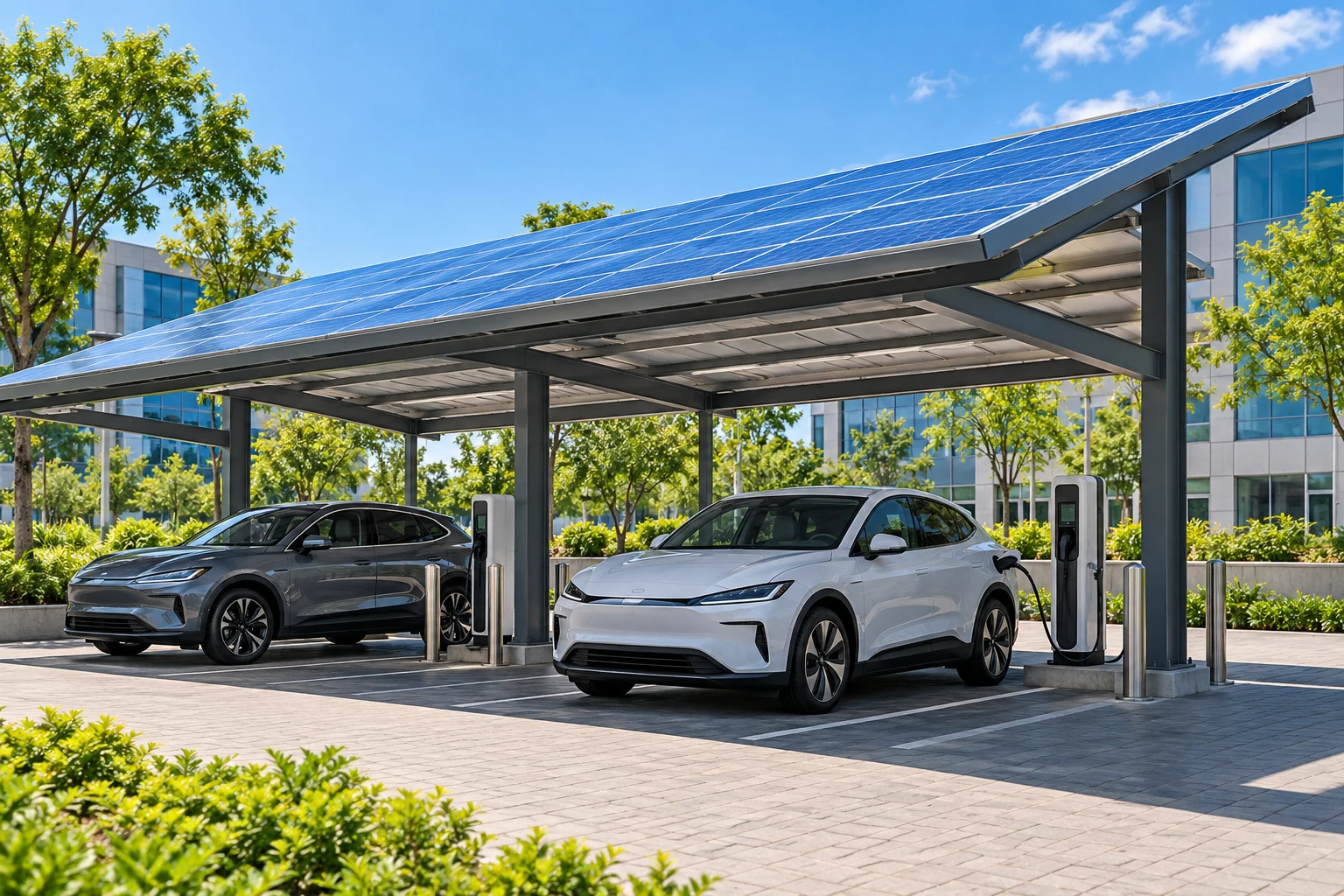
Shade. Solar power. EV readiness.
A coordinated design for the canopy, electrical system and charging demand.
Solar canopy
Use available parking area for photovoltaic generation, with a structure designed around vehicle circulation, clear height, drainage, foundations and site wind loads.
Integrated EV charging
Plan charger locations and cable reach around the parking layout. Select AC or DC charging according to vehicle compatibility, parking duration, available electrical capacity and the operating model.
Energy management
Coordinate solar output, building loads and charging demand. Load management can help keep charging within the site’s available supply capacity; battery storage can be assessed where useful.
Safe, serviceable installation
Account for electrical protections, earthing, charger isolation, impact protection, accessible maintenance routes and safe cable placement during design.
Designed around how your site parks.
Workplaces & commercial campuses
Long daytime parking can align well with solar generation. Assess employee, visitor and fleet charging needs together.
Housing societies
Plan shared parking, resident permissions, common-meter arrangements and charging access before finalising the project.
Institutions & hospitality
Provide shaded parking and destination charging while considering visitor dwell time and the site’s energy demand.
Does a solar carport charge only from sunlight?
Not necessarily. In a typical grid-connected design, solar supplies available energy while the grid can support the remaining demand. Charging at night requires grid supply or appropriately sized storage. Charger power, solar capacity and battery capacity are separate design decisions.
Can the project receive a subsidy?
Eligibility depends on the consumer category, use and current scheme rules. Commercial parking does not automatically qualify for residential assistance. Housing societies should check the common-facility route, which includes eligible EV-charging use, before assuming any support.
Read the RWA and housing-society subsidy guide
Start with a practical site brief.
Share the location, parking layout, number of bays, electricity bill, sanctioned load, vehicle types and expected charging hours. KGDC can assess the structure, solar sizing and charging infrastructure as one project.
Request a site assessment